Climate finance news is reshaping global investment markets at a pace that few analysts predicted even three years ago. From a $15 trillion sustainable finance industry that is on track to nearly double by 2031, to a fully operational United Nations carbon market launched at COP30 in Belém, Brazil, the intersection of money and climate policy has never carried more weight for investors, asset managers, and institutional funds. This article covers all major developments shaping portfolios, regulations, and market prices in 2026 – green bond issuance forecasts, ESG fund performance, carbon credit pricing, renewable energy stock themes, greenwashing regulation, and the latest on Paris Agreement finance goals.
Whether you hold ESG ETFs, follow sustainable bond markets, or want to know how the EU Carbon Border Adjustment Mechanism affects industrial stocks, this breakdown has you covered.
Climate Finance News 2026: Key Takeaways
Top 5 Things Investors Need to Know Right Now
- Global sustainable bond issuance is forecast at $800 billion to $950 billion in 2026 – down from $1 trillion-plus peaks, but far from a retreat.
- The Article 6.4 Paris Agreement Crediting Mechanism (PACM) launched at COP30, creating the first UN-supervised global carbon market.
- The EU Carbon Border Adjustment Mechanism entered its definitive phase on January 1, 2026, applying a real carbon price to imports of steel, cement, fertilizers, aluminium, and electricity.
- Decarbonization bonds are the fastest-growing segment of sustainable debt in 2026, forecast to double year-over-year to $40 billion.
- Global sustainable fund assets reached $3.9 trillion in Q4 2025 – up 15% year-over-year, with European investors leading demand.
Climate Finance News and the 2026 Sustainable Bond Market
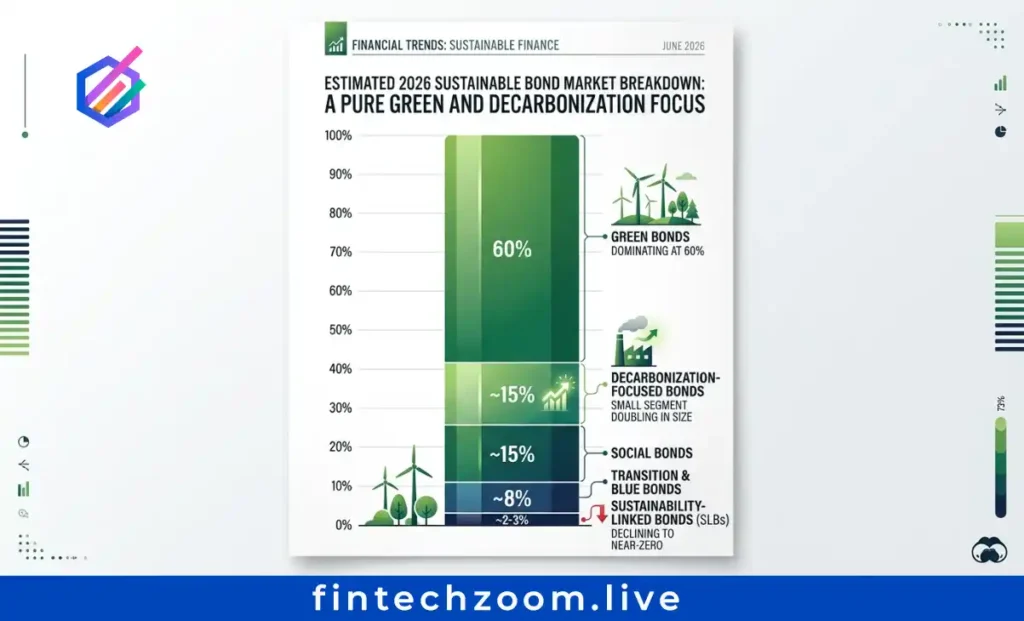
Climate finance news from the first quarter of 2026 tells a clear story: the era of explosive volume growth is over, and a period of disciplined, quality-focused maturation has begun. Both Moody’s Ratings and S&P Global Ratings have published 2026 forecasts projecting sustainable bond issuance in the $800 billion to $950 billion range, down from four consecutive years of issuance above $1 trillion. This is consolidation, not collapse.
Environmental Finance summarizes the shift cleanly: “ESG as we knew it is dead, but sustainable finance is here to stay.” The sentiment captures the political reality – anti-ESG backlash in the United States, geopolitical pressure on green policy commitments, and a pullback by some asset managers from formal climate coalitions – alongside the structural reality that trillions of dollars are still being deployed into clean energy, resilient infrastructure, and low-carbon industrial projects.
The 2026 sustainable bond market is being shaped by three forces: regulatory momentum in Europe and Asia, maturation of green bond standards, and fresh demand for instruments that can credibly finance decarbonization in carbon-intensive sectors.
Regional breakdown for 2026:
Europe retains its position as the world’s largest sustainable bond market, accounting for an estimated 42 to 47 percent of global issuance. Strong regulatory frameworks including the EU Green Bond Standard (EuGB), the Corporate Sustainability Reporting Directive (CSRD), and the Sustainable Finance Disclosure Regulation (SFDR) continue to attract both issuers and investors. Asia-Pacific is the fastest-growing region, with record sovereign green bond programs in China, Japan, South Korea, and India. North America has slowed, with labeled issuance falling to just 8 percent of global supply in 2025 as some US issuers opt for conventional bonds to avoid additional reporting obligations under a politically unfriendly environment.
| Bond Type | 2026 Forecast | Year-Over-Year Change |
|---|---|---|
| Green Bonds | $530 billion | Flat |
| Sustainability Bonds | $190 billion | Slight decline |
| Social Bonds | $155 billion | Flat |
| Decarbonization Bonds | $40 billion | +100% |
| Sustainability-Linked Bonds (SLBs) | $25 billion | Sharp decline |
| Total Market | $800-$950 billion | -5% to flat |
Sources: Moody’s Ratings January 2026, S&P Global Ratings March 2026
Climate Finance News 2026 Update: The Rise of Decarbonization Bonds and the Fall of SLBs
One of the most striking climate finance news stories of 2026 is the simultaneous rise and fall happening within the same market. Decarbonization bonds – instruments designed to finance decarbonization in hard-to-abate sectors like steel, shipping, cement, and aviation – are the fastest-growing debt category, forecast to double from $20 billion to $40 billion. New standards from the ICMA and the EU are defining what qualifies, and institutional investors hungry for credible decarbonization exposure are backing them.
Meanwhile, sustainability-linked bonds (SLBs) are in freefall. After record issuance of $96 billion in 2021, SLBs are projected at just $25 billion in 2026. The reason is accountability: performance targets set at issuance are now coming due, and a notable number of corporate issuers have missed them. Investor skepticism about the ambition and enforceability of SLB commitments has crippled demand. The lesson this Climate Finance News 2026 news cycle delivers is clear: credibility and verifiability now trump label and label alone.
Adaptation finance is also gaining ground. With physical climate risks such as flooding, drought, extreme heat, and storm damage now priced into insurance, real estate, and infrastructure, sovereign issuers are embedding adaptation-focused projects into their debt strategies. This is a shift that sustainable debt analysts are beginning to track as closely as mitigation finance.
Climate Finance News 2026 on ESG Investing and Fund Performance
Climate Finance News 2026 news is inseparable from ESG fund flows in 2026. After a turbulent 2025 marked by political pressure, net outflows in early quarters, and a sharp rebound in Q2 2025, the picture entering 2026 is cautiously optimistic. Assets under management in global sustainable funds reached $3.9 trillion in Q4 2025 – up 15 percent year-over-year, according to TD Securities. In Europe, ESG funds account for 20 percent of the entire fund universe. In the US, that figure sits at just 1 percent, a gap that speaks volumes about where sustainable investing is rooted most deeply.
Morgan Stanley’s Institute for Sustainable Investing found that 88 percent of global individual investors express interest in sustainable investing, with younger demographics showing the strongest intent. Separately, 86 percent of asset owners plan to increase allocations to sustainable investments over the next two years. The money is moving, even if not as fast as climate scientists would want.
Many corporate sustainable ETFs outperformed traditional benchmarks in 2025, rebuilding confidence after a rough stretch. US sustainable fund assets matched their 2021 peak in growth terms, even amid a continued period of headline outflows driven by the politicized ESG debate.
Climate Finance News 2026 for ESG ETF Investors: What to Focus On
For investors seeking ESG ETF exposure in 2026, the latest data in Climate Finance News 2026 points to several filtering criteria worth applying:
- Avoid SLB-heavy funds. Given the credibility concerns around sustainability-linked instruments, funds with large SLB weightings carry higher greenwashing and performance risk.
- Prioritize adaptation and resilience. ETFs weighted toward flood-resilient infrastructure, water management, and climate-hardened supply chains are attracting institutional capital as physical climate risk gets priced into credit spreads.
- Grid infrastructure exposure matters. The electrical grid is the bottleneck of the clean energy economy. ETFs with holdings in smart grid companies, HVDC transmission developers, and energy storage manufacturers are positioned where the capital gap is largest.
- Asia-Pacific diversification adds growth. With the fastest-growing sustainable bond market and expanding sovereign ESG programs, Asia-Pacific ETF exposure provides a growth dimension that Europe alone cannot offer.
- Verify the verification. Top-rated ESG ETFs in 2026 distinguish themselves by using third-party data providers – MSCI, Sustainalytics, ISS – to validate environmental claims rather than relying on self-reported issuer data.
Climate Finance News 2026 – Carbon Credit Markets Enter a New Era
No financial sector has changed more dramatically heading into 2026 than carbon markets, as Climate Finance News 2026 confirms. The global carbon credit market was valued at approximately $834 billion to $933 billion in 2025 and is growing at a compound annual rate of 35 to 38 percent, with some projections pointing toward $17 trillion to $20 trillion by 2035. The drivers are structural: stronger regulations, rising corporate net zero commitments, and the arrival of long-awaited global market infrastructure.

Climate Finance News 2026 on the Article 6.4 PACM Launch and COP30 Outcomes
The single biggest climate finance news event of late 2025 was COP30 in Belém, Brazil. After years of contested negotiations, COP30 delivered three landmark carbon market outcomes:
1. Article 6.4 PACM became operational. The Paris Agreement Crediting Mechanism – a UN-supervised centralized global carbon market – moved from framework to reality. For the first time, countries can trade high-integrity carbon credits under unified international rules. Financial institutions now have a compliant, high-confidence entry point into carbon as an asset class. First credit issuances under PACM are expected by end of 2026.
2. The Clean Development Mechanism (CDM) will close by end of 2026. The old Kyoto Protocol crediting system, which issued nearly 2.5 billion credits since 2001, is being wound down. Remaining CDM funds transfer to PACM development, and existing CDM projects have until mid-2026 to migrate to the new framework. This removes the long-running confusion of operating two parallel crediting systems.
3. Brazil launched the Open Coalition on Carbon Markets. Now comprising 18 countries including China, the EU, UK, Canada, and Singapore, the coalition aims to interconnect regional carbon systems, create shared standards, and improve liquidity. This is the most significant multilateral carbon market cooperation since Paris.
CORSIA – the aviation sector’s carbon offsetting scheme – is now the largest single source of carbon credit demand globally, projected to drive the market through 2030. Airlines are required to offset emissions above 2019 levels, creating a consistent institutional demand base for high-integrity credits.
Also Read This: Real Estate Tokenization in 2026 – How Blockchain Is Opening Property Investment to Everyone
Climate Finance News on EU CBAM – The Definitive Phase Begins January 2026
The EU Carbon Border Adjustment Mechanism entered its definitive phase on January 1, 2026. This is Climate Finance News 2026 with direct equity market implications. Importers of five carbon-intensive product categories – steel, cement, fertilizers, aluminium, and electricity – must now purchase CBAM certificates reflecting the carbon price embedded in their products’ production.
For investors, CBAM creates a direct price signal that rewards low-carbon industrial producers and penalizes high-carbon ones. Companies exporting to the EU from countries without equivalent carbon pricing now face an additional cost that decarbonized competitors do not pay – expected to accelerate capital deployment into clean industrial technologies, electrification, and carbon capture.
| Carbon Market Segment | 2025 Market Size | 2026 Key Development |
|---|---|---|
| EU ETS (Compliance) | ~$368 billion | CBAM adds enforcement pressure |
| Voluntary Carbon Market | ~$466 billion | Quality-over-volume shift, PACM entry |
| India CCTS | Newly formed | Full mandatory launch mid-2026 |
| PACM (Article 6.4) | Newly operational | First credits expected by end-2026 |
| CORSIA (Aviation) | Growing | Largest VCM demand source through 2030 |
India’s Carbon Credit Trading Scheme (CCTS) is making headlines across Asia. Scheduled for full operational launch by mid-2026, this mandatory compliance market targets nine high-emission industrial sectors and marks the formal arrival of the world’s third-largest emitter in carbon price discovery.
Climate Finance News 2026 on Renewable Energy Stocks and Clean Technology
Climate finance news on clean energy investment in 2026 centers on a shift in the investor narrative. The question is no longer whether renewable energy will grow – it will – but where the most attractive risk-adjusted opportunities sit within an increasingly diverse clean energy complex.
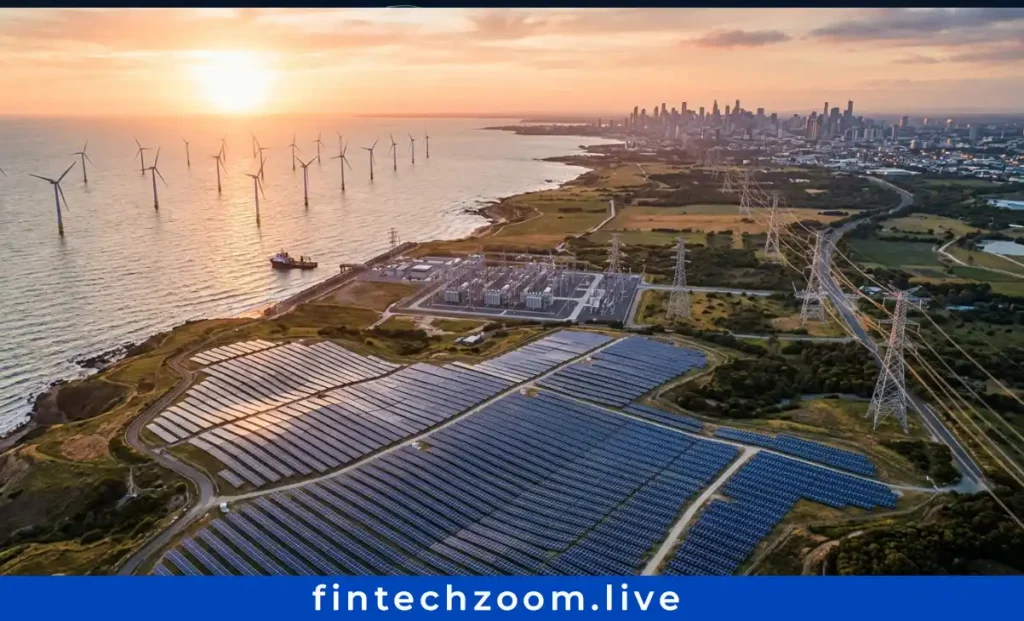
Morningstar’s 2026 outlook flags soaring investment in renewable energy as one of its top five trends. However, it also warns that the sector is not uniform. Each technology – solar, wind, energy storage, grid infrastructure, green hydrogen – has its own distinct demand drivers, policy support structure, and capital requirement profile. Selectivity is the new watchword.
Climate Finance News 2026 News on Solar, Wind, Grid Infrastructure and Green Hydrogen
Solar energy stocks are benefiting from a structural tailwind that few predicted a decade ago: artificial intelligence. US data center power demand is projected to triple by 2030. Hyperscalers including Amazon, Meta, and Alphabet are locked into long-term solar power purchase agreements (PPAs) to meet their climate commitments – creating revenue visibility for solar developers that rivals utility contracts. This connects two of the biggest investment themes of 2026 tracked in Climate Finance News 2026.
Grid infrastructure is the most underappreciated investment theme in the entire clean energy complex. In many markets, grid investment has fallen well behind renewable energy deployment. Transmission bottlenecks, aging infrastructure, and the need for HVDC (high-voltage direct current) lines capable of moving offshore wind power over long distances are creating a multi-trillion-dollar opportunity. Companies focused on smart meters, grid automation, transformer manufacturing, and energy storage are attracting institutional capital as the enabling infrastructure of the clean energy economy.
Wind energy stocks face a more complex picture. Offshore wind in particular has seen cost overruns, supply chain pressures, and project cancellations in the US market. European offshore wind projects, backed by stronger policy frameworks and grid integration experience, remain more investable for now.
Green hydrogen investment sits at a crossroads in 2026. Long-term structural demand from hard-to-electrify sectors – fertilizer production, steel, cement, maritime shipping – remains intact. But near-term economics are challenging. Production costs remain high relative to fossil fuel alternatives, electrolyzer manufacturing has not yet achieved the cost reductions that solar and wind achieved through mass deployment, and infrastructure for hydrogen storage and transport is largely absent outside of industrial clusters. The most investable green hydrogen positions in 2026 are anchored by government-backed offtake agreements, EU Hydrogen Bank auction winners, or projects co-located with industrial users.
Electric vehicle and critical mineral stocks are another major pillar of climate finance news 2026. After two years of inventory corrections and price wars among automakers, investor focus has moved up and down the EV supply chain. Battery technology companies, EV charging network operators, and lithium, cobalt, and rare-earth element producers are attracting capital as national security concerns around China’s dominance of critical mineral processing push Western governments toward industrial policy support.
Climate Finance News 2026 News on Greenwashing Regulation
Greenwashing – making misleading or unsupported environmental claims about a financial product or corporate activity – has become one of the most heavily regulated areas in sustainable investing. The regulatory environment in 2026 is bifurcated sharply by geography.
In the United States, the SEC under the current administration has stepped back from several mandatory climate disclosure requirements, including Scope 3 emissions reporting for public companies. However, California’s SB 253 and SB 261 remain in force, covering large companies operating in the state. US-listed multinationals with EU operations still face full CSRD and SFDR compliance obligations under European law.
In Europe, the regulatory push is accelerating. The CSRD is bringing mandatory double-materiality sustainability reporting to tens of thousands of companies. The EU Green Bond Standard provides a verified, regulated framework for issuers who want to claim the EuGB label. The SFDR continues to require fund managers to categorize and disclose the sustainability characteristics of their products. The UK’s Financial Conduct Authority (FCA) is pushing for clearer standards on climate-related claims in fund marketing, particularly around the word “sustainable.”
For investors reading Climate Finance News 2026, the practical implication is clear: ESG claims must be backed by verifiable, standardized data. The International Sustainability Standards Board (ISSB) is establishing a global reporting baseline – IFRS S1 and S2 – that is being adopted by regulators across the UK, Australia, Canada, Singapore, and others. Investors who rely on self-reported sustainability data without cross-checking against independent verification are taking on greenwashing risk that will be increasingly regulated out of the market.
Climate Finance News 2026 on Paris Agreement Goals and Net Zero Investment Strategy
Climate Finance News 2026 exists within the larger context of the Paris Agreement’s 1.5°C target and the UN Sustainable Development Goals. The honest assessment from major institutions is that progress is insufficient. Environmental Finance notes that global SDG progress is alarmingly off track. 2025 was the third warmest year on record. The gap between current climate finance flows and what is needed to meet Paris targets has widened, not narrowed.
Estimates from multiple sources suggest that $3 trillion to $5 trillion per year in climate investment is needed by 2030 to stay on track. Current sustainable finance flows, even at $1.6 trillion annually, fall well short. The post-COP30 framework – with its operational Article 6.4 mechanism, NDC alignment requirements, and the Open Carbon Coalition – provides structural scaffolding for scaling up, but the capital mobilization challenge remains enormous.
For investors building a net zero strategy, Climate Finance News 2026 points to four practical actions:
- Measure portfolio carbon footprint using PCAF (Partnership for Carbon Accounting Financials) standards.
- Set science-based targets aligned with a 1.5°C pathway through the Science Based Targets initiative (SBTi).
- Increase allocation to climate solutions across listed equities, green bonds, and private markets.
- Engage portfolio companies on credible climate plans using frameworks like CA100+ and NZAOA guidance.
Climate Finance News 2026 News on Biodiversity Finance and Impact Investing
Biodiversity finance is the newest frontier in Climate Finance News 2026. The TNFD (Taskforce on Nature-related Financial Disclosures) framework is now being adopted by major asset managers alongside TCFD, adding nature risk alongside climate risk in portfolio analysis. The EU Roadmap toward Nature Credits and the ICMA’s Sustainable Bonds for Nature are defining the infrastructure for financial products that directly fund ecosystem protection and restoration.
For impact investors, 2026 sees continued growth in blended finance structures that mix concessional public capital with private investment to finance adaptation and resilience projects in emerging markets. These structures are designed to address a persistent gap: adaptation projects – sea walls, drought-resistant agriculture, early warning systems – are chronically underfunded relative to mitigation, yet are the most urgently needed by the communities most exposed to climate impacts.
Blue bonds, which fund ocean conservation and fisheries, and biodiversity-linked instruments tied to measurable ecological outcomes are attracting growing institutional interest, though liquidity remains limited in this early-stage market.
Climate Finance News 2026 and Climate Fintech Startups
Climate Finance News 2026 increasingly intersects with financial technology as startups build the market infrastructure that climate capital deployment requires. Several categories of climate fintech are attracting investment in 2026:
Carbon intelligence platforms like Sylvera and South Pole are providing independent quality ratings for carbon credits – helping buyers distinguish high-integrity projects with genuine additionality from low-quality offsets. This infrastructure is directly enabling institutional participation in voluntary carbon markets.
Physical climate risk data providers are integrating flood, drought, heat, and storm risk into credit spread models and asset valuation tools, giving banks, insurers, and real estate investors quantified exposure data at the asset level.
Green loan origination platforms are digitizing the process of assessing, structuring, and monitoring sustainable loans for corporate and infrastructure borrowers, reducing cost and improving data quality.
Nature credit registry technology is building the systems needed to issue, verify, and trade biodiversity credits with the same market integrity that carbon credits have slowly developed.
Artificial intelligence is increasingly central to climate fintech – both as a tool for processing vast ESG data sets and as a sustainability challenge in itself, given the carbon and water intensity of training and running large language models. Climate finance news in late 2025 and into 2026 has repeatedly raised the tension between tech companies’ ambitious climate commitments and their rapidly growing AI infrastructure footprints.
Climate Finance News 2026 | Frequently Asked Questions
What is the green bonds market size in 2026? Green bonds are expected to reach approximately $530 billion in new issuance in 2026 – representing nearly 60 percent of all sustainable bond issuance. Total labelled sustainable bond supply is forecast at $800 billion to $950 billion across green, social, sustainability, decarbonization-focused, and sustainability-linked categories.
What happened at COP30 that matters for sustainable investors? COP30 in Belém, Brazil (November 2025) delivered three major outcomes tracked by every Climate Finance News 2026 source: the formal operationalization of Article 6.4 PACM, CDM closure by end-2026, and the launch of Brazil’s Open Coalition on Carbon Markets with 18 member countries.
What is a carbon credit and what is the price in 2026? A carbon credit represents one metric ton of CO2 or equivalent greenhouse gas reduced, removed, or avoided. EU ETS compliance credits are trading around 50 to 70 euros per tonne. Voluntary carbon market credits range from $5 to $50-plus per tonne, with high-quality technology-based removal credits commanding premiums. The focus for 2026 buyers is quality over cheap volume.
Is ESG investing still worth it in 2026? Yes, for disciplined investors. Global sustainable fund assets hit $3.9 trillion in Q4 2025, up 15 percent year-over-year. European institutional demand remains robust. The key shift in Climate Finance News 2026 is from broad ESG labelling toward proven environmental outcomes with independent verification. Funds that can demonstrate measurable impact are attracting capital; those relying on self-reported data face growing skepticism.
What is greenwashing and how is it regulated in 2026? Greenwashing refers to misleading environmental claims made by fund managers, corporate issuers, or companies. Regulation diverges sharply in 2026: Europe is tightening rules through CSRD, SFDR, and the EU Green Bond Standard, while the US has walked back some SEC climate disclosure requirements. The ISSB’s IFRS S1 and S2 standards are emerging as the international baseline being adopted by regulators globally.
What renewable energy stocks are gaining attention in 2026? Grid infrastructure, solar power developers with long-term AI hyperscaler PPAs, energy storage manufacturers, and HVDC transmission companies are the leading themes in 2026 renewable energy investing. Green hydrogen companies with government-backed offtake agreements are selective opportunities, while offshore wind in the US remains challenged by cost pressures.
How does the EU CBAM affect stock investors? The EU CBAM, which entered its definitive phase January 1, 2026, applies a carbon cost to imported steel, cement, fertilizers, aluminium, and electricity. Stocks of high-carbon producers in countries without equivalent carbon pricing face new cost exposure on EU exports. Clean industrial technology companies, low-carbon steel producers, and electrified industrial process operators benefit from the competitive cost advantage CBAM creates.
What is net zero investing and how do I start? Net zero investing aligns a portfolio with a global pathway toward zero greenhouse gas emissions by 2050 or earlier. Starting steps: measure portfolio emissions using PCAF standards, align with Science Based Targets initiative guidance, increase allocation to climate solutions sectors tracked in current Climate Finance News 2026, and engage portfolio companies through CA100+ or NZAOA frameworks.