Last revised: November 17, 2026 · By the FintechZoom Markets Desk, reviewed under our editorial policy
YouTube news today, checked on November 17, 2026, comes down to two dated facts. First, Alphabet reported YouTube ads revenue of $11.21 billion for the quarter ended September 30, 2026, up 9.2% from $10.26 billion a year earlier, its slowest growth of the three 2026 quarters (Alphabet Q3 2026 earnings release, October 28, 2026). Second, YouTube will raise the bar for new channels joining the YouTube Partner Program (YPP) on February 1, 2027: 1,000 subscribers plus 8,000 qualified watch hours in 365 days, or 20 million qualified Shorts views in 90 days, double the current thresholds (YouTube Official Blog, August 10, 2026). Existing partners have until January 31, 2027 to accept updated terms in YouTube Studio (YouTube Help).
This page tracks YouTube as a business: Alphabet’s reported YouTube figures, the YPP rules that decide who gets paid, the revenue splits, and the 2026 policy changes on monetization, AI labels and likeness detection. For news across all social platforms see our social media news today page; for creator tools on Instagram see Instagram marketing tools 2026.
YouTube news today: the 2026 timeline
Each entry below is dated and tied to a YouTube, Google or Alphabet document, with one exception marked as a press report.
| Date | What happened | Source |
|---|---|---|
| Jan 16, 2026 (week of) | Non-graphic or dramatized content about self-harm, suicide, abortion, and domestic and sexual abuse became eligible for full ads. Child abuse and eating disorders stayed restricted. | YouTube Creator Insider video, as reported by TechCrunch |
| Jan 21, 2026 | Neal Mohan’s annual letter: Shorts averaging 200 billion daily views, more than $100 billion paid to creators, artists and media companies over four years, Shorts time limits for parents. | YouTube Official Blog |
| Feb 4, 2026 | Alphabet said YouTube’s 2025 revenue across ads and subscriptions passed $60 billion. | Google blog, Q4 2025 remarks |
| Mar 10, 2026 | Likeness detection extended to government officials, political candidates and journalists. | TechCrunch |
| May 2026 | Likeness detection opened to all creators aged 18 and over, rolling out over several weeks. | YouTube Help Community |
| Aug 2026 | Views counted from the first frame on Shorts, long-form and live; depictions of death in educational or news content clarified for ads. | YouTube policy changelog |
| Aug 10, 2026 | YPP overhaul announced, effective Feb 1, 2027. | YouTube Official Blog |
| Sep 23, 2026 | Made on YouTube: AI editing in Shorts, video A/B testing in Studio, likeness detection on mobile, affiliate program target of 35 countries by year end. | YouTube Official Blog |
| Oct 2026 | Some public-interest content under hateful content and harmful acts policies made eligible for ad revenue. | YouTube policy changelog |
| Oct 28, 2026 | Q3 YouTube ads $11.207 billion (+9.2%); YouTube Music and Premium above 150 million subscribers including trials. | Alphabet earnings release |
| Nov 2026 | New AI labels and disclosure rules for artists and labels in the YouTube Music app. | YouTube policy changelog |
Alphabet’s reported YouTube numbers through Q3 2026
Alphabet reports one YouTube-only revenue line, YouTube ads. Subscriptions sit inside “Google subscriptions, platforms, and devices”, which also holds YouTube TV, NFL Sunday Ticket, Google One, Google Play and hardware, so it overstates YouTube’s subscription business. Figures are in millions of US dollars from the Q1, Q2 and Q3 2026 earnings releases. Growth rates are FintechZoom calculations.
| Quarter (2026) | YouTube ads | Same quarter 2025 | Growth | Google subscriptions, platforms and devices | Growth |
|---|---|---|---|---|---|
| Q1 (Mar 31) | 9,883 | 8,927 | +10.7% | 12,384 | +19.3% |
| Q2 (Jun 30) | 11,055 | 9,796 | +12.9% | 12,911 | +15.2% |
| Q3 (Sep 30) | 11,207 | 10,261 | +9.2% | 14,290 | +11.0% |
| First nine months | 32,145 | 28,984 | +10.9% | 39,585 | +14.9% |
In Q3 2026 YouTube ads were 13.7% of Google’s $82.01 billion advertising revenue and 8.8% of Alphabet’s $127.58 billion total revenue (FintechZoom calculations from the release). Sequential growth from Q2 was 1.4%. Alphabet’s Q3 diluted EPS was $2.12 against $2.87 a year earlier, and net income fell to $26.47 billion from $34.98 billion. Sundar Pichai said in the release that YouTube passed “150 million YouTube Music and Premium subscribers globally, including trials.” For the full-year picture, Alphabet said on February 4, 2026 that YouTube’s 2025 revenue across ads and subscriptions passed $60 billion (Google blog). Alphabet has not published a YouTube-only subscription figure.
Alphabet Class A (GOOGL), live chart from TradingView. Price data is delayed and is not an earnings figure.
For our coverage of Alphabet shares, valuation and the rest of the business, see the Google stock page. This page does not give a view on the stock.
YouTube Partner Program changes from February 1, 2027
YouTube said on August 10, 2026 that the YPP had over 3 million creators and described the update as “the first significant changes since 2018” (YouTube Official Blog). The rules below come from YouTube’s Help Center pages on YPP eligibility and the 2027 changes.
| Rule | Until January 31, 2027 | From February 1, 2027 |
|---|---|---|
| Ads and Premium revenue, new applicants | 1,000 subscribers plus 4,000 watch hours in 12 months, or 10 million Shorts views in 90 days | 1,000 subscribers plus 8,000 watch hours in 365 days, or 20 million Shorts views in 90 days |
| Channels already in YPP | No change | Not affected by the new entry bar |
| Fan funding, Shopping, Creator Partnerships | 500 subscribers plus 3,000 watch hours in the last year, or 3 million Shorts views in 90 days | Unchanged |
| Shorts Creator Pool payouts | Paid to monetizing Shorts creators | Requires 10 million qualified Shorts views over the last 90 days; missing it does not remove a channel from YPP or affect long-form earnings |
| Active channel test | Not defined in these terms | Any one of: 1,000 watch hours in 365 days, 1 million Shorts views in 90 days, or 2 long-form videos or 5 Shorts uploaded every 90 days |
| Targeted Shorts ads | Not offered | 45% direct revenue share when an advertiser targets five or fewer channels, on top of pool earnings |
| Premium Lite | Limited markets | All countries with Premium; creators share 60% of net Premium Lite subscription revenue |
Creators must accept the Watch Page Monetization, Shorts Monetization and, where relevant, Commerce Product modules in YouTube Studio by January 31, 2027. YouTube’s Help page says a channel that misses the date stays in the YPP but stops earning from the modules it has not accepted until it accepts them. Channels that turned on fan funding before 2023 may still be on an older Commerce Product Addendum and need to move to the current module by the same date.
How YouTube splits revenue with creators
YouTube’s partner earnings overview gives the published shares. It also says there is no guarantee of how much, or whether, a creator will be paid.
| Revenue source | Creator share | How it is paid |
|---|---|---|
| Long-form watch page ads | 55% of net ad revenue | Per video, from ads shown on public videos |
| Shorts feed ads | 45% of allocated Creator Pool revenue | Monthly pool split by share of engaged views in each country |
| Fan funding (memberships, Super Chat, Super Stickers, Super Thanks) | 70% | Commerce Product Module |
| Premium (long-form and Shorts) | 55% long-form, 45% Shorts | Paid from a pool of 30% of net Premium revenue, or 60% for Premium Lite, based on viewing |
On Shorts, YouTube first pools Shorts feed ad revenue each month and sets part aside for music licensing. A Short with one music track sends half its revenue to the Creator Pool, and one with two tracks sends a third. Creators then keep 45% of their allocation whether or not music was used (YouTube Shorts monetization policies). The old version of this page gave a Shorts share of 40% to 55%, which does not match YouTube’s published 45%. YouTube’s August 2026 post also said that, based on 2026 performance, partners on average earn more when a viewer signs up for Premium than when the same viewer watched ads.
Monetization policy updates in 2026
Sensitive topics and the advertiser-friendly guidelines
In the week of January 16, 2026, YouTube said non-graphic or dramatized videos about self-harm, suicide, abortion, and domestic and sexual abuse can earn full ad revenue. Content about child abuse and eating disorders kept its limits (TechCrunch). The advertiser-friendly content guidelines still put graphic depictions of controversial issues in the no-ads tier, and put strong profanity in titles or thumbnails there as well.
Changes listed in YouTube’s policy changelog
YouTube’s policy update log adds several 2026 items. In April, channel membership prices for new members began to follow current exchange rates. In August, YouTube clarified when educational, documentary or news content showing death can earn ads, and said views will count from the first frame of playback on Shorts, long-form videos and live streams. In September it renamed the Paid Product Placements policy to the Branded Content Policy and said automated systems may add the paid promotion label when a creator has not declared one. In October some public-interest content under the hateful content and harmful acts policies became eligible for ad revenue. In November YouTube Music added AI labels and disclosure rules for artists and labels.
AI labels, inauthentic content and likeness detection
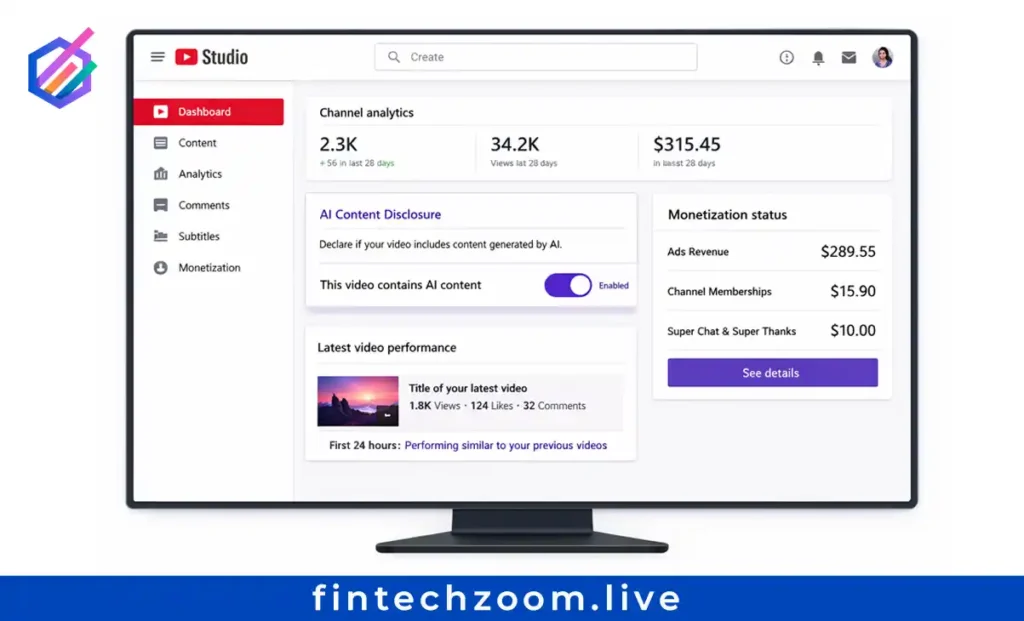
YouTube requires creators to disclose realistic AI-generated or altered content, such as making a real person appear to say something they did not, or altering footage of a real event. Its Help Center lists uses that need no label, including AI-assisted scripts, titles and thumbnails, beauty filters, captions and cloning your own voice for dubs. YouTube may add a label itself for content made with its own AI tools, content with C2PA metadata, or content its systems detect. The same page says disclosure alone does not limit a video’s audience or its ability to earn; repeated failure to disclose can lead to removal or suspension from the YPP. The old version of this page said labeled channels lost recommendations, which is the opposite of YouTube’s stated rule.
On July 15, 2025, YouTube renamed its “repetitious content” monetization policy to “inauthentic content”. It covers mass-produced or templated videos, and names “AI-generated content made with generic or unoriginal templates” as ineligible. The separate reused content policy, which covers clips and compilations without meaningful changes, did not change (YouTube channel monetization policies). Mohan’s January 2026 letter said YouTube would build on its spam and clickbait systems to reduce what he called “AI slop” (YouTube Official Blog).
Likeness detection lets enrolled people find videos that use an AI version of their face. YouTube extended it to government officials, political candidates and journalists in March 2026 (TechCrunch, March 10, 2026) and to all creators aged 18 and over from May 2026 (YouTube Help Community). At Made on YouTube on September 23, 2026, Mohan said the tool is coming to mobile and will combine speaking-voice detection with face detection (YouTube Official Blog).
Shorts, TV viewing and shopping
Mohan’s January 21, 2026 letter put Shorts at an average of 200 billion daily views, more than 500,000 creators in YouTube Shopping, and more than 1 million channels a day using YouTube’s AI creation tools in December 2025. It also said parents would be able to set a Shorts scrolling limit, including zero. YouTube repeated the 200 billion daily Shorts views figure in its August 10, 2026 YPP post, along with more than a billion hours of watch time on TV screens a day.
Nielsen’s August 2026 Gauge, released October 22, 2026, gave YouTube a platform-record 15.8% of total US TV viewing for the five weeks to August 30, with streaming at 49.6% (Nielsen). Nielsen said it will publish the September and October results together later in 2026 after a one-time method change. The Made on YouTube post on September 23 said more than 20 million videos are uploaded each day and set a target of 35 countries for the shopping affiliate program by the end of 2026.
What the YouTube figures mean for Alphabet investors
YouTube ads growth slowed from 12.9% in Q2 to 9.2% in Q3, and Q3 added only $152 million over Q2. The subscriptions line grew faster than ads in each 2026 quarter, though it includes non-YouTube products. The YPP changes take effect in Q1 2027, and YouTube said it expects to pay creators more in 2027 than in 2026. Readers following the stock can compare these figures with the Q4 2026 release, which Alphabet usually publishes in early February.
From our desk: what we found checking this update
The April 2026 edition of this page had several errors we corrected against YouTube’s own pages. It gave a Shorts revenue share of 40% to 55%; YouTube publishes 45%. It said AI labels reduce recommendations; YouTube’s AI disclosure page says disclosure alone does not limit reach or earnings. It described $60 billion as an “annualized” early-2026 run rate, when Alphabet’s February 4, 2026 remarks applied that figure to full-year 2025 ads and subscriptions. We also removed unsourced claims, including a 2.7 billion monthly user figure, a 35% rise in creator payouts, and CPM and RPM ranges with no stated source or method.
YouTube news today FAQs
What is the biggest YouTube news today for creators?
The largest change is the YouTube Partner Program update that takes effect on February 1, 2027. New channels will need 1,000 subscribers plus 8,000 watch hours in 365 days or 20 million Shorts views in 90 days to share in ad and Premium revenue. Existing partners keep their status but must accept updated terms in YouTube Studio by January 31, 2027.
How much ad revenue did YouTube make in Q3 2026?
Alphabet reported YouTube ads revenue of 11.207 billion dollars for the quarter ended September 30, 2026, up 9.2 percent from 10.261 billion dollars a year earlier. For the first nine months of 2026 YouTube ads totaled 32.145 billion dollars, up 10.9 percent by our calculation.
Does Alphabet report YouTube subscription revenue separately?
No. Subscription income from YouTube Premium, YouTube Music and YouTube TV is reported inside Google subscriptions, platforms and devices, which also includes Google One, Google Play and hardware. That line was 14.29 billion dollars in Q3 2026. Alphabet said YouTube Music and Premium passed 150 million subscribers including trials.
What share of ad revenue do YouTube creators keep?
YouTube says partners get 55 percent of net revenue from ads on long-form watch pages and 45 percent of the Shorts revenue allocated to them from the monthly Creator Pool. Fan funding such as memberships and Super Chat pays 70 percent.
Will existing YouTube partners lose monetization in 2027?
Channels already in the program are not affected by the higher entry thresholds. They must still accept the updated terms by January 31, 2027 to keep earning from those modules, and to receive Shorts Creator Pool payouts they need 10 million qualified Shorts views over the last 90 days. Missing the Shorts threshold does not remove a channel from the program.
Do I need to label AI content on YouTube?
YouTube requires a label when realistic content was made or altered with AI, for example a real person shown saying something they did not say. AI help with scripts, titles, thumbnails, captions or color edits does not need a label. YouTube says disclosure alone does not limit reach or earnings, but repeated failure to disclose can lead to penalties.
What is the YouTube inauthentic content policy?
On July 15, 2025 YouTube renamed its repetitious content policy to inauthentic content. It makes mass-produced, templated or repetitive videos ineligible for monetization, including AI-generated content made with generic templates. The reused content policy for clips and compilations stayed the same.
How many daily views do YouTube Shorts get?
YouTube said in January 2026 that Shorts averages 200 billion daily views and repeated that figure in its August 10, 2026 Partner Program post. YouTube has not broken out Shorts revenue in Alphabet filings.
How we report on YouTube: we use Alphabet’s earnings releases and SEC filings for revenue, YouTube’s Official Blog and Help Center for rules and dates, and name any press source when YouTube has not published the item itself. Growth rates and shares marked as FintechZoom calculations are our arithmetic on those filings. We do not publish CPM or RPM ranges unless a source with a stated method provides them.
Revision history: November 17, 2026: full rewrite with Alphabet Q1 to Q3 2026 YouTube figures, the February 2027 YPP changes, revenue shares from YouTube’s Help Center, 2026 policy changes, and removal of unsourced statistics. Previous edition: April 13, 2026.
Related: Social media news today · Instagram marketing tools 2026 · Google stock · Nasdaq today · Business finance news today · The 2026 tech reset
This page is for information only and is not investment advice. Figures can change after publication; check the linked sources. See our disclaimer.
Sources: Alphabet Q3 2026 earnings release (SEC) · Alphabet Q2 2026 release · Alphabet Q1 2026 release · Google blog, Q4 2025 remarks · YouTube Blog, YPP updates · YouTube Help, YPP changes · YouTube Help, YPP eligibility · YouTube Help, partner earnings · YouTube Help, Shorts monetization · YouTube advertiser-friendly guidelines · YouTube policy updates · YouTube Help, AI disclosure · YouTube monetization policies · Neal Mohan 2026 letter · Made on YouTube 2026 · YouTube Help Community, likeness detection · TechCrunch, January 16, 2026 · TechCrunch, March 10, 2026 · Nielsen August 2026 Gauge