
Fintech research resources 2026 are no longer a niche concern for analysts and academics. They represent the strategic intelligence layer separating informed investors, founders, and regulators from those operating without data in the fastest-moving sector in global finance. The global fintech market now stands at $460.76 billion, with 31,801 companies competing across payments, lending, AI deployment, and crypto regulation. Decisions made today require verified data, yet the information environment suffers from vendor-sponsored noise and outdated baselines that pollute search results.
This guide delivers a verified, curated research library covering every major fintech sub-sector. Sources draw from institutional research, peer-reviewed working papers, and primary government data. The structure serves three distinct audiences: investors seeking funding data, builders tracking tech adoption and regulation, and analysts requiring projections and benchmarks. Each section opens with a direct answer to the most pressing questions, then expands with supporting detail and real-world application.
Key Takeaways
- Global fintech market size hits $460.76 billion in 2026, with Asia-Pacific holding 44.86% market share and digital payments representing 45% of total sector revenue.
- Investment funding recovered to $116 billion in 2025 after hitting a $95.6 billion trough in 2024, with deal sizes growing even as volume declines.
- AI in fintech expands from $30 billion to a projected $83.1 billion by 2030, with 57% of lending platforms now using AI-driven credit scoring.
- 134 countries actively explore CBDCs, with 66 in live development and 91% of central banks surveyed conducting active research.
- Neobank profitability shifts dramatically, with 69% of publicly listed fintechs profitable by 2024 compared to 80% unprofitable in 2023.
Fintech Research Resources 2026 | Global Market Size and Statistics
How large is the fintech market in 2026? The global fintech market reaches $460.76 billion in 2026, rising from $394.88 billion in 2025. This reflects an 18.20% compound annual growth rate (CAGR) that continues through 2034, when projections place the market at $1.76 trillion.
Asia-Pacific dominates with 44.86% market share, while North America holds 34.3%. The United States specifically accounts for $58.01 billion in 2025, projected to reach $66.82 billion in 2026. Fintechs currently capture just 3% of the total $12.7 trillion financial services revenue, yet they grow at 21% year-over-year, indicating massive expansion potential.
Digital payments lead adoption metrics. Approximately 82% of global bank account owners used digital payments in 2024. The sector includes 290 unicorns globally with a combined valuation of approximately $1.2 trillion. Tencent stands as the world’s largest fintech by market cap at $766.80 billion, while Visa represents the largest US fintech at $662.6 billion.
Regional breakdowns show North America at $144.46 billion (2026 projection), Asia-Pacific at $143.72 billion, Europe at approximately $98 billion, Latin America at $36 billion, and Middle East/Africa at $26 billion. These figures vary by research methodology, as some firms include embedded finance and crypto infrastructure while others exclude them.
Global Fintech Market Size by Region (2025–2026)
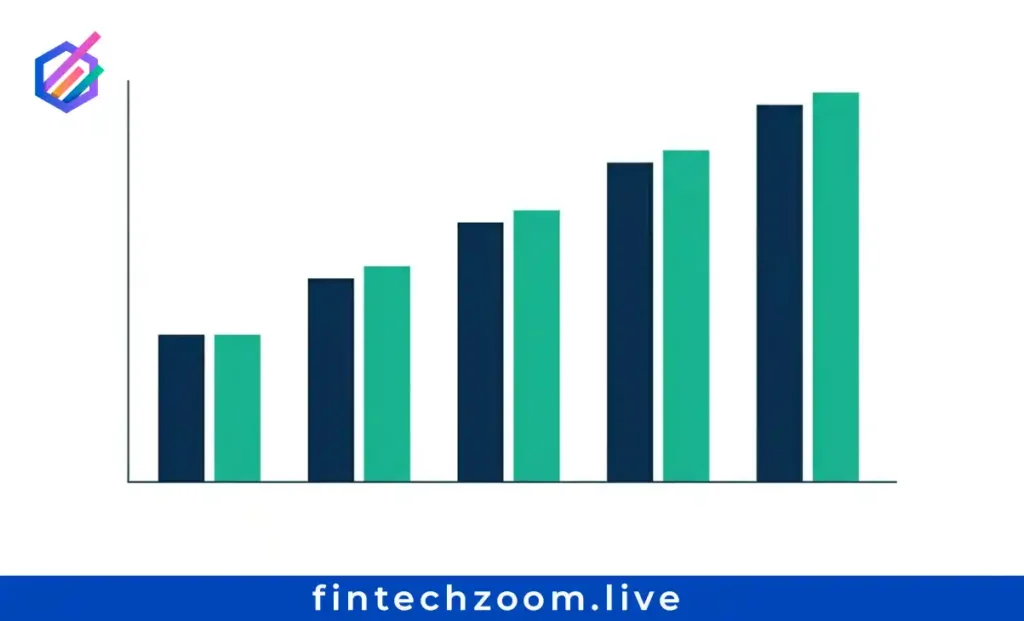
| Region | 2025 Value | 2026 Projected | Market Share |
|---|---|---|---|
| North America | $127.52B | $144.46B | 32.3% |
| Asia-Pacific | $119.34B | $143.72B | 30.2% |
| Europe | est. $85B | est. $98B | ~22% |
| Latin America | est. $30B | est. $36B | ~8% |
| MEA | est. $22B | est. $26B | ~6% |
Sources: Fortune Business Insights, IMARC Group, KPMG Pulse of Fintech H2 2025
The unicorn landscape reveals 120 unicorns in the US, 35 in the UK, 25 in India, and 20 in China. Sub-sector distribution shows 68 in payments, 51 in banking, 43 in lending, 32 in wealth/investment, 28 in insurance, and 20 in crypto/blockchain. Fastest-growing by market cap include Webull (+3,617%), Sezzle (+972%), Robinhood (+395%), and Upstart (+235%).
Fintech Research Resources 2026 | Investment Funding Data
What do fintech research resources 2026 reveal about investment recovery? Global fintech funding rebounded to $116 billion in 2025 across 4,719 deals, recovering from a $95.6 billion trough in 2024 that marked the lowest funding level since 2017. Deal volume continues declining, but average deal sizes increase, indicating capital concentration rather than sector retreat.
The Americas dominated 2025 with $66.5 billion in funding. The United Kingdom attracted $7.3 billion in H1 2025 alone, representing more than half of all EMEA fintech funding for that period. The largest single deal in H1 2025 involved BlackRock’s $3.2 billion acquisition of UK-based Preqin, signaling institutional interest in data infrastructure.
H1 2025 specifically saw $44.7 billion raised across 2,216 deals according to KPMG Pulse of Fintech. US H1 2025 funding reached $20.9 billion across 889 deals, down from $26.7 billion across 929 deals in H2 2024. This shift reflects investor selectivity, with capital flowing to mature, revenue-generating platforms rather than early-stage speculative bets.
AI-enabled fintech startups captured 30% of VC dollars in 2025, though AI broadly took 58% of all VC funding, meaning fintech’s AI share remains under-indexed versus the wider tech sector. Profitability metrics show improvement: the share of US fintech firms with positive net margins grew from 8% in 2022 to 22% in 2025 according to Silicon Valley Bank data.
Fintech’s share of total US VC funding fell from over 20% in 2022 to under 10% in 2025, reflecting both sector maturation and competition from AI infrastructure plays. The funding environment now favors platforms demonstrating clear unit economics over growth-at-all-costs models.
Primary Funding Data Sources
| Source | Publisher | Cost | Best For |
|---|---|---|---|
| Pulse of Fintech | KPMG | Free | Deal volume and regional breakdowns |
| State of Fintech | CB Insights | Freemium | Unicorn tracking, sector funding |
| Fintech Report | SVB | Free | US-specific, profitability metrics |
| Crunchbase | Crunchbase | Freemium | Startup-level rounds, investors |
| PitchBook | PitchBook | Paid | Deal-level granularity, cap tables |
Fintech Research Resources 2026 | AI in Finance Research Reports
How large is the AI in fintech market? Fintech research resources 2026 place the AI in fintech market at approximately $30 billion in 2025, with projections reaching $83.1 billion by 2030 at a 22.60% CAGR. Global financial firm AI spending hit $35 billion in 2023 and projects to reach $126.4 billion by 2028.
Generative AI in finance represents a specific sub-segment projected to surpass $12 billion by 2033. Chatbots and virtual assistants constitute the fastest-growing application at 36% CAGR through 2030. Current adoption rates show 57% of lending platforms now use AI-driven credit scoring, with fraud detection, AML monitoring, robo-advisory, and document processing following as primary use cases.
Productivity benchmarks from 2026 research highlight loan processing automation rates, customer service deflection metrics, and automated report generation capabilities. Explainability requirements have intensified under the EU AI Act implementation, affecting how models deploy in credit scoring and insurance underwriting. Model risk management now references Federal Reserve SR 11-7 interpretive updates and OCC guidance on AI governance.
Bias and fairness testing has become mandatory under emerging regulatory frameworks globally. Financial institutions must demonstrate algorithmic accountability, with particular scrutiny on lending decisions and insurance pricing. Research from Stanford RegLab and BIS working papers provides the primary academic foundation for these developments.
Top AI in Finance Research Sources

| Source | Publisher | Cost |
|---|---|---|
| AI in Finance Working Papers | BIS | Free |
| AI in Financial Services | Accenture | Free (gated) |
| Machine Learning in Finance | Stanford RegLab | Free |
| AI Banking Report | McKinsey | Free (gated) |
| AI in Fintech Market Report | Mordor Intelligence | Paid |
| FinTech AI Benchmark | Deloitte Insights | Free (gated) |
Fintech Research Resources 2026 | Digital Payments and Open Banking Research
What do payment technology reports show for 2026? Digital payment transaction value reached $13.17 trillion globally in 2025. Digital payments represent the largest fintech sub-sector at approximately 45% of total market revenue, roughly $153 billion in 2026. Digital wallet adoption projects 5.2 billion users by 2026.
Real-time payments infrastructure shows distinct regional trajectories. The US sees FedNow adoption curves accelerating among community banks. India’s UPI expands cross-border interoperability. The EU experiences SEPA Instant volume growth across domestic markets. ISO 20022 migration impacts correspondent banking and cross-border settlement speeds, with full implementation affecting messaging standards through 2026.
Buy Now Pay Later (BNPL) research shows renewed market interest. Sezzle grew 972% in market cap during 2025, while Affirm reached $20.4 billion by January 2026. Regulatory clarity crystallizes throughout 2026, with UK BNPL regulation timelines finalizing, CFPB BNPL interpretive rules taking effect, and EU Consumer Credit Directive updates modifying compliance requirements. Default rate trajectories and delinquency trend research covering 2022 to 2025 periods help assess credit risk models.
Open banking research focuses on three major regulatory frameworks. In the US, CFPB Section 1033 governs open banking data portability with specific implementation timelines affecting bank compliance burdens. The EU advances PSD3 proposals with key differences from PSD2 affecting third-party providers (TPPs). Australia’s Consumer Data Right (CDR) expands into non-banking sectors including energy and telecoms. India’s Account Aggregator framework shows adoption data with specific fintech implications for credit underwriting.
Financial inclusion research anchors on World Bank Global Findex 2025 data covering the 1.4 billion adults still unbanked. GSMA State of the Mobile Money Industry tracks 315+ services across 100+ markets. CGAP working papers address digital credit risks and over-indebtedness in developing markets. The Alliance for Financial Inclusion publishes policy research from 90+ central banks in developing nations.
Fintech Research Resources 2026 | Neobank and Embedded Finance Reports
What do neobank research reports indicate about profitability? The global neobank user base reached 301.7 million in 2024 and expects to pass 350 million in 2025. Market sizing places neobanks at $261.4 billion in 2025, projecting $310.15 billion to $385.05 billion for 2026. Long-term projections suggest $5.51 trillion by 2033 at 44.95% CAGR.
Profitability metrics shifted dramatically. Approximately 80% of neobanks operated unprofitably as of 2023, yet by 2024, 69% of publicly listed fintechs achieved profitability. Monzo reported £113.9 million pre-tax profit for its financial year ending March 2025, representing an eightfold increase year-on-year. Europe leads revenue share at 31.5%, while Brazil leads penetration at approximately 43% of population.
Net interest income for digital banks projects reaching $2.09 trillion globally by 2029. Global digital deposits reached $15.32 trillion in 2024, projecting $22.62 trillion by 2029. These figures reflect the transition from growth-phase customer acquisition to revenue-generating product expansion.
Embedded finance research shows market size at $112.6 billion to $148.38 billion in 2024/2025, projecting $197.06 billion in 2026 and $237.4 billion by 2029 at 16.1% CAGR. US embedded finance specifically represents $41.34 billion in 2025. Primary deployment sectors include e-commerce platforms, gig economy applications, and SaaS tools integrating financial services.
Banking-as-a-Service (BaaS) faces heightened regulatory scrutiny following the Synapse collapse, affecting partnership models between fintechs and chartered banks. Embedded insurance emerges as the fastest-growing sub-category, with white-label products integrating into travel, mobility, and retail platforms.
Key Neobank and Digital Banking Research Sources
| Report | Publisher | Frequency | Access |
|---|---|---|---|
| Pulse of Fintech | KPMG | Bi-annual | Free |
| Global Banking Annual Review | McKinsey | Annual | Free (gated) |
| World Retail Banking Report | Capgemini | Annual | Free (gated) |
| Neobank Intelligence Brief | CB Insights | Quarterly | Freemium |
| Digital Banking User Report | Statista | Annual | Freemium |
Fintech Research Resources 2026 | Blockchain, DeFi and CBDC Research
What does blockchain adoption research show for 2026? Blockchain technology represents the largest technology segment in fintech at 38.40% market share in 2026. Four in ten financial organizations indicate blockchain will change how services deliver. Real-world asset (RWA) tokenization accelerates, with bonds, real estate, and fund units moving on-chain.
Key sectors include trade finance, cross-border payments, securities settlement, and supply chain finance. Blockchain compliance accounts for 32% of global fintech-as-a-service revenue in 2024. Enterprise adoption focuses on private and consortium chains for interbank settlement, while public blockchain integration remains limited to specific use cases like stablecoin settlement.
DeFi market research requires careful methodology regarding Total Value Locked (TVL). Research sources include DeFiLlama for free TVL data, Dune Analytics for customizable dashboards, Messari for paid protocol analysis, and Nansen for on-chain intelligence. Institutional DeFi entry shows traditional finance players entering through regulated structures and permissioned pools.
Payment stablecoins project reaching $3.7 trillion by 2030 under bullish scenarios according to Deloitte. This growth depends on regulatory clarity and banking integration. Current adoption centers on cross-border remittances and treasury management for crypto-native companies.
CBDC digital currency research tracks 134 countries in some stage of exploration, with 66 in active development. Ninety-one percent of central banks surveyed actively explore CBDCs according to Digital Silk and JM Financial Services research. Twenty-five percent of US CFOs expect to use cryptocurrencies within two years according to Deloitte surveys.
CBDC Status by Key Jurisdiction
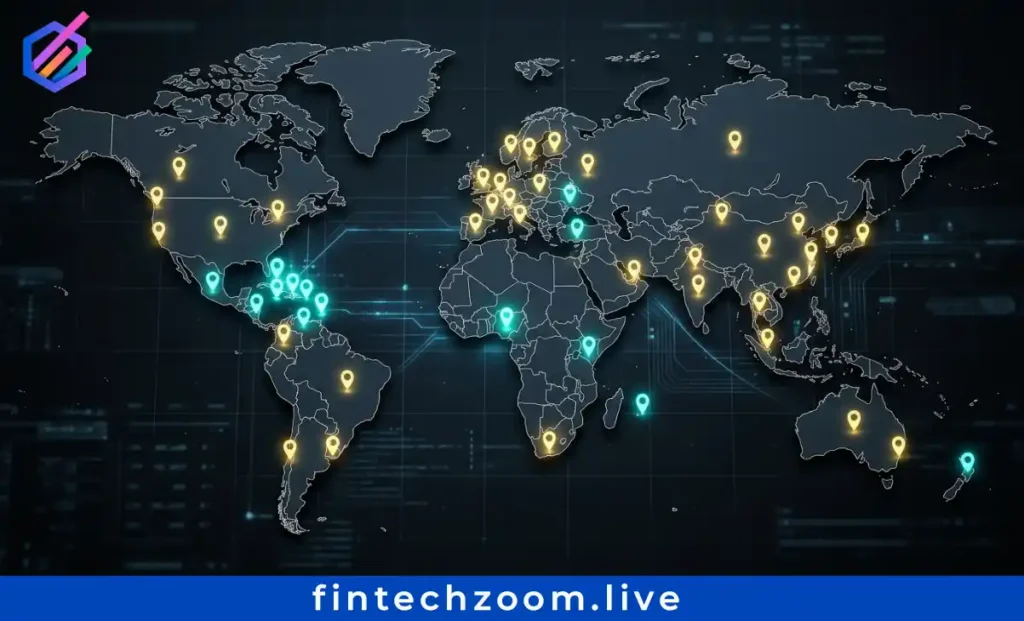
| Jurisdiction | CBDC Name | Status (2026) | Primary Research Source |
|---|---|---|---|
| China | Digital Yuan (e-CNY) | Live and expanding | People’s Bank of China |
| EU | Digital Euro | Preparation phase | ECB Digital Euro Hub |
| US | Digital Dollar | Exploratory — no formal launch | Atlantic Council Tracker |
| UK | Digital Pound | Design phase | Bank of England |
| India | Digital Rupee (e-RUPI) | Pilot expanding | Reserve Bank of India |
| Nigeria | eNaira | Live | Central Bank of Nigeria |
| Eastern Caribbean | DCash | Live | ECCB |
Fintech Research Resources 2026 | Regulation, RegTech and Compliance Research
How large is the RegTech market in 2026? Ninety-four regulatory sandboxes operate globally, more than double the 2018 count according to Kearney. Global AML compliance spending reached $274 billion in 2022, representing one of the largest compliance cost categories worldwide.
RegTech primary use cases include transaction monitoring, KYC/AML orchestration, regulatory reporting, and sanctions screening. The intersection with AI appears in credit scoring, where 57% of lending platforms now use AI-driven models requiring compliance oversight. RegTech100 from FinTech Global provides annual rankings of the 100 most innovative RegTech companies.
Key 2026 regulatory frameworks shape research priorities. The EU AI Act rolls out from 2024 through 2026 with explainability requirements for AI in credit scoring, insurance underwriting, and fraud detection. MiCA (Markets in Crypto-Assets Regulation) reaches full implementation, affecting stablecoin issuers and crypto asset service providers in the EU.
CFPB Section 1033 drives open banking data portability research in the US, with implementation timelines affecting bank compliance burdens. DORA (Digital Operational Resilience Act) in the EU mandates ICT risk management requirements for all financial firms. Basel III endgame revisions in the US affect capital requirements for large banks with fintech lending partnership implications.
Financial inclusion research draws from World Bank Global Findex Database for unbanked population data, CGAP working papers for digital credit in developing markets, AFI policy research from 90+ central banks, and GSMA mobile money reports covering 315+ services.
Fintech Research Resources 2026 | Insurtech and WealthTech Reports
What do insurtech market reports show post-funding peak? Insurtech funding peaked in 2021, rationalized through 2022 to 2024, and shows recovery signs in 2025. The Ergo Group’s $2.6 billion acquisition of Next Insurance in 2025 signals consolidation interest. Embedded insurance represents the fastest-growing sub-category, with white-label products integrating into e-commerce, travel, and mobility platforms.
AI underwriting adoption benchmarks show property, health, and auto lines leading automation. Reinsurance tech undergoes analytics-driven transformation reshaping risk pooling models. The sector moves from customer acquisition focus toward loss ratio improvement and underwriting precision.
WealthTech market research 2026 shows robo-advisory AUM on trajectory toward $10 trillion+ in longer-term projections. Fractional investing growth reflects platform scale, with Robinhood reaching $96 billion market cap by January 2026. Social and copy trading research focuses on engagement and retention metrics across platforms.
AI-powered financial planning generates debate regarding advisor augmentation versus full replacement. Current research from Simon-Kucher & Partners, Oliver Wyman wealth management reports, and Deloitte Insights suggests hybrid models dominate, with AI handling portfolio construction and humans managing complex financial planning relationships.
Fintech Research Resources 2026 | How to Use This Library
How should readers evaluate fintech research credibility? Apply five critical questions before trusting any report. First, identify the funding source, as vendor-sponsored research differs materially from independent analysis. Second, examine sample methodology, looking for disclosed sample sizes rather than “proprietary surveys” lacking transparency. Third, verify data collection dates, as 2024 data appearing in “2026 reports” proves common and misleading. Fourth, understand market definitions, since estimates diverge 50 to 100% based on whether crypto, embedded finance, or adjacent tech receives inclusion. Fifth, check for primary source cross-referencing, as quality research cites central banks, government data portals, or peer-reviewed papers rather than internal surveys alone.
Red flags include anonymous authorship without institutional affiliation, projected CAGR figures lacking underlying assumption disclosure, and market sizing irreconcilable with other credible sources within reasonable variance ranges.
Fintech Research by Reader Type
| If You Are… | Start With These Sources |
|---|---|
| Investor (VC/PE) | KPMG Pulse, CB Insights, PitchBook, SVB Report |
| Fintech Founder | McKinsey, Accenture Tech Vision, BIS (regulatory) |
| Regulator or Policy Analyst | BIS, IMF FinTech Notes, FCA, FATF, World Bank |
| Academic Researcher | SSRN, NBER, BIS Working Papers, MIT FinTech Initiative |
| Journalist or Market Analyst | Chainalysis, CB Insights, DeFiLlama, Atlantic Council |
| Consumer or Retail Investor | Statista, Fortune BI summaries, Grand View summaries |
Annual Fintech Reports Publication Calendar
| Report | Publisher | Month Published | Access |
|---|---|---|---|
| Pulse of Fintech (H2 prior year) | KPMG | February | Free |
| Crypto Crime Report | Chainalysis | February | Free |
| Global Fintech Report | BCG + QED | Q1 | Free |
| Global Banking Annual Review | McKinsey | April | Free (gated) |
| State of Fintech Q1 | CB Insights | April | Freemium |
| Pulse of Fintech H1 | KPMG | August | Free |
| Banking Technology Vision | Accenture | Q3 | Free (gated) |
| RegTech100 | FinTech Global | Q4 | Paid |
| FinTech Annual Report | SVB | Q4 | Free |
| State of the Mobile Money Industry | GSMA | November | Free |
Fintech Research Resources 2026 | Frequently Asked Questions
Q: What is the global fintech market size in 2026?
Fintech research resources 2026 from Fortune Business Insights project the global fintech market at $460.76 billion in 2026, up from $394.88 billion in 2025. This reflects an 18.20% CAGR expected to continue through 2034, when the market projects at $1.76 trillion. Market size estimates vary across research firms based on definitional scope; some include embedded finance and crypto infrastructure, pushing totals higher. Cross-referencing at least two credible sources gives a reliable working range.
Q: Where can I find free fintech industry reports for 2026?
Fintech research resources 2026 that are entirely free include: KPMG Pulse of Fintech (bi-annual, best for funding data), Chainalysis Crypto Crime Report (annual, February release), BCG and QED’s Global Fintech Report, and all publications from the BIS, ECB, Federal Reserve, and IMF research portals. The Atlantic Council CBDC Tracker remains free and updates in real time. Most commercial research firms offer free executive summaries even when full reports require payment.
Q: How much has global fintech investment recovered since the 2024 trough?
Fintech research resources 2026 tracking investment confirm a meaningful recovery. Global fintech funding fell to $95.6 billion in 2024, the lowest since 2017, before rebounding to $116 billion in 2025 across 4,719 deals according to KPMG. The Americas led with $66.5 billion. The UK attracted $7.3 billion in H1 2025 alone, representing more than half of all EMEA fintech funding for the period. Deal volume continues falling, but average deal sizes grow, indicating capital concentration rather than sector retreat.
Q: What does the research say about AI in finance for 2026 and beyond?
Fintech research resources 2026 on AI show the market at approximately $30 billion in 2025, projecting to reach $83.1 billion by 2030 at a 22.60% CAGR according to Mordor Intelligence. Global financial firms are forecast to spend $126.4 billion on AI by 2028. The fastest-growing application is chatbots and virtual assistants at 36% CAGR. Research shows 57% of lending platforms now use AI-driven credit scoring. Generative AI projects as a $12 billion market in finance by 2033.
Q: How many countries are developing CBDCs in 2026?
Fintech research resources 2026 on CBDCs show 134 countries in some stage of exploration, with 66 in active development. Research from Digital Silk indicates 91% of central banks surveyed actively explore digital currencies. The BIS Innovation Hub serves as the leading primary research source, publishing results from CBDC experiments across multiple jurisdictions. The Atlantic Council CBDC Tracker provides a free real-time map of all CBDC programs globally.
Q: What research shows about neobank profitability in 2026?
Fintech research resources 2026 on neobank profitability show a significant transition. Around 80% of neobanks were unprofitable as of 2023, but by 2024, 69% of publicly listed fintech firms had achieved profitability. Monzo reported £113.9 million pre-tax profit for its financial year ending March 2025, an eightfold increase. Research sources include Oliver Wyman, Simon-Kucher, and individual public filings from Nu Holdings (Nubank), Revolut, and Monzo.
Q: What financial inclusion research is available for 2026?
Fintech research resources 2026 on financial inclusion anchor on the World Bank Global Findex Database, CGAP working papers on digital credit in developing markets, and GSMA’s annual State of the Mobile Money Industry report covering 315+ services across 100+ countries. The Alliance for Financial Inclusion (AFI) publishes policy research from 90+ central banks and financial regulators in developing nations, all available free of charge.
Q: How should I evaluate competing fintech market size estimates?
Fintech research resources 2026 frequently show wide divergence. Global fintech market estimates for 2025 range from $253.4 billion (IMARC Group) to $416.85 billion (Precedence Research for fintech-as-a-service). This variance stems from definitional differences: some cover fintech company revenues only, while others include embedded finance, crypto infrastructure, and adjacent technology spend. When evaluating estimates, check the base year, market definition scope, and whether CAGR assumptions are disclosed. Cross-referencing against KPMG, McKinsey, and BCG as triangulation points gives a reliable working range.
The fintech sector in 2026 is defined by three converging forces: AI maturation driving operational efficiency at scale, regulatory frameworks catching up to two years of rapid innovation, and emerging markets accelerating past developed-world adoption curves. The data confirms recovery from the 2023 to 2024 funding trough and entry into a sustained growth trajectory toward $1.76 trillion by 2034.
The challenge is no longer finding fintech data. It is triangulating credible sources against vendor-sponsored noise. The best fintech research resources 2026 require cross-referencing across primary institutional sources, not reliance on a single commercial report.
FintechZoom monitors the latest market research across all 29 fintech categories. Return to this page quarterly as new institutional reports publish.