Last revised: November 13, 2026 · By the FintechZoom Markets Desk, reviewed under our editorial policy
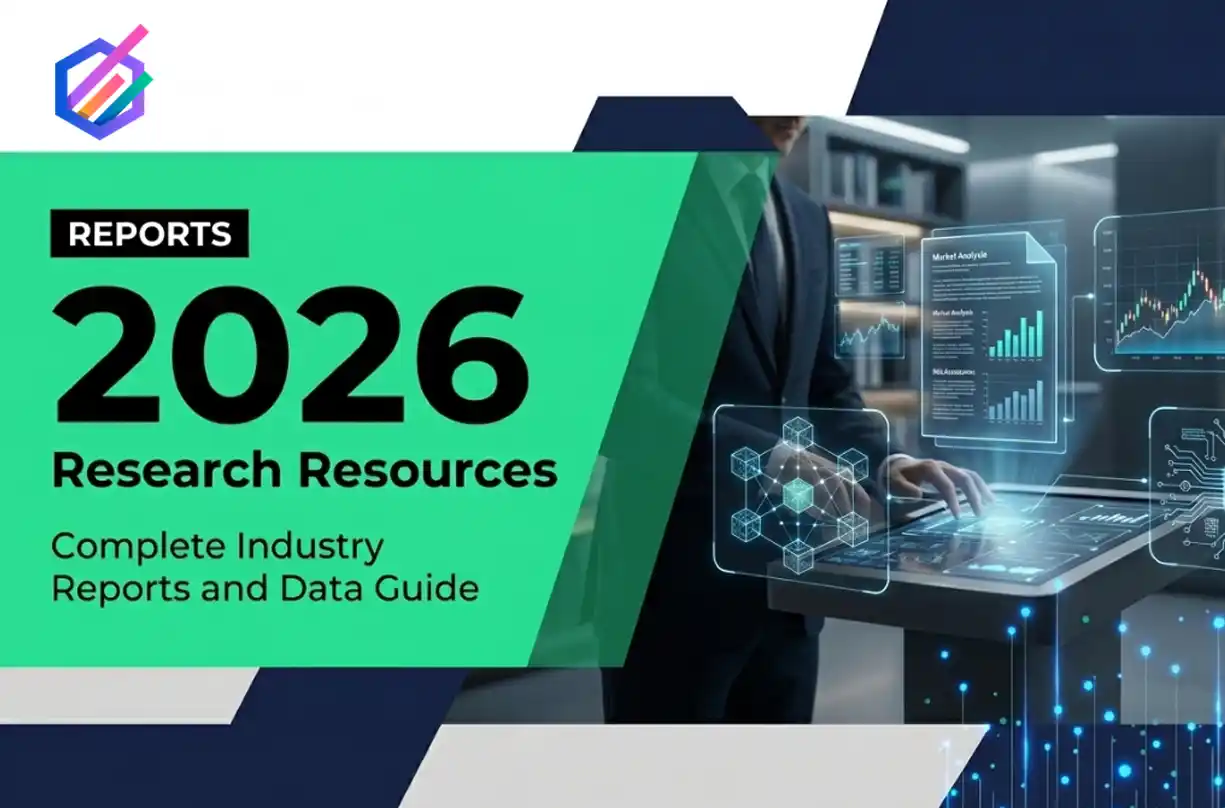
Fintech research resources 2026 are gathered here in one directory: where to find the regulators, central banks, standard-setting bodies, filings databases and data tools that publish primary information about financial technology. Rather than repeat vendor market-size numbers, it points you to sources you can read and check yourself. The best free starting points are the Bank for International Settlements, the Financial Stability Board, the International Monetary Fund and the World Bank, all of which released fintech-relevant reports in 2026. Most entries below are marked free, free with registration, or paid, and every link was opened and checked on November 13, 2026.
Live market context from TradingView. These readings are automated and change through the day; they are not FintechZoom recommendations.
What this page covers: primary institutional research (BIS, FSB, IMF, World Bank), regulators and company filings (SEC EDGAR, CFPB, ECB), economic and market data tools (FRED, BIS and ECB data portals), crypto, DeFi and CBDC trackers, commercial and academic research, financial inclusion data, how to judge a report before trusting it, and the dated 2026 publications worth reading first. For coverage of specific themes see our separate pages on AI in finance trends 2026, fintech regulation news 2026 and fintech cybersecurity trends 2026.
Fintech research resources 2026: primary institutional sources
These bodies publish original data and analysis on the financial system. They are the sources that commercial reports cite, so reading them directly removes a layer of interpretation. All four below are free to read.
Bank for International Settlements (BIS)
The BIS research hub at bis.org publishes working papers, the annual Economic Report and bulletins on payments, tokenisation and central bank digital currencies. The BIS Annual Economic Report 2026 (published 28 June 2026) runs to three chapters, with the third, “Anchoring trust in money: innovation beyond stablecoins,” covering digital money. The BIS Data Portal offers statistics on cross-border banking, credit, property prices and payments, with bulk downloads and an SDMX API. Free.
Financial Stability Board (FSB)
The FSB coordinates financial regulation across the G20 and tracks crypto, stablecoins and AI. In October 2026 it published Sound Practices for Responsible Adoption of Artificial Intelligence (15 October 2026), setting out 12 practices for financial firms, and a note to the G20 on global stablecoin cross-border vulnerabilities (12 October 2026). Its financial innovation area lists the full back catalogue. Free.
International Monetary Fund (IMF)
The IMF publishes the twice-yearly Global Financial Stability Report and the FinTech Notes series. The Global Financial Stability Report, October 2026 (“Resilience, Risk, and Transformation,” 13 October 2026) includes a chapter on tokenization and one on hedge funds, which it sizes at about 13 trillion dollars in assets. The IMF FinTech Notes cover CBDC design, tokenized reserves and payments. Free.
World Bank
The World Bank runs the Global Findex Database, the benchmark survey of account ownership and payments. The Global Findex 2025 (released 16 July 2025) reports that nearly 80 percent of adults worldwide now hold a financial account, while 1.3 billion adults remain without access to financial services. The microdata and datasets are free to download.
Regulators, supervisors and company filings
For primary disclosures from companies and the rules they operate under, go to the regulators directly.
| Source | What it holds | Cost |
|---|---|---|
| SEC EDGAR full-text search | US company filings (10-K, 10-Q, S-1, 8-K) searchable by word since 2001; the primary record for listed fintechs | Free |
| CFPB Data and Research | US consumer complaint database, HMDA mortgage data, credit card agreements, consumer credit trends | Free |
| ECB Data Portal | Euro area statistics: inflation, monetary aggregates, exchange rates, payments | Free |
| UK FCA | UK conduct rules, the regulatory sandbox and policy papers on open banking and crypto | Free |
Economic and market data tools
These are data platforms rather than reports, useful when you want the underlying series instead of a chart in someone else’s deck.
| Tool | What it offers | Cost |
|---|---|---|
| FRED (St. Louis Fed) | 853,000 economic time series from 127 sources, with an API, an Excel add-in and bulk downloads | Free |
| BIS Data Portal | Cross-border banking, credit to the non-financial sector, property prices and payment statistics via SDMX API | Free |
| ECB Data Portal | Euro area macro and payments data | Free |
| IMF Data | World Economic Outlook, Financial Access Survey and balance-of-payments data | Free |

Crypto, DeFi and CBDC research
On-chain data is unusually open, so much of the best crypto research is free. For CBDCs, central banks and the Atlantic Council keep the most complete trackers.
On-chain and market data
DeFiLlama tracks total value locked across DeFi protocols, stablecoin market capitalisation and exchange volumes, updated live and free, with a paid API and bulk-download tier for heavy users. Chainalysis publishes the annual Geography of Cryptocurrency report; the 2026 edition ranks Brazil first for grassroots adoption and is free with registration. Dune Analytics offers free community dashboards, while Messari and Nansen sit behind paid tiers.
Central bank digital currency trackers
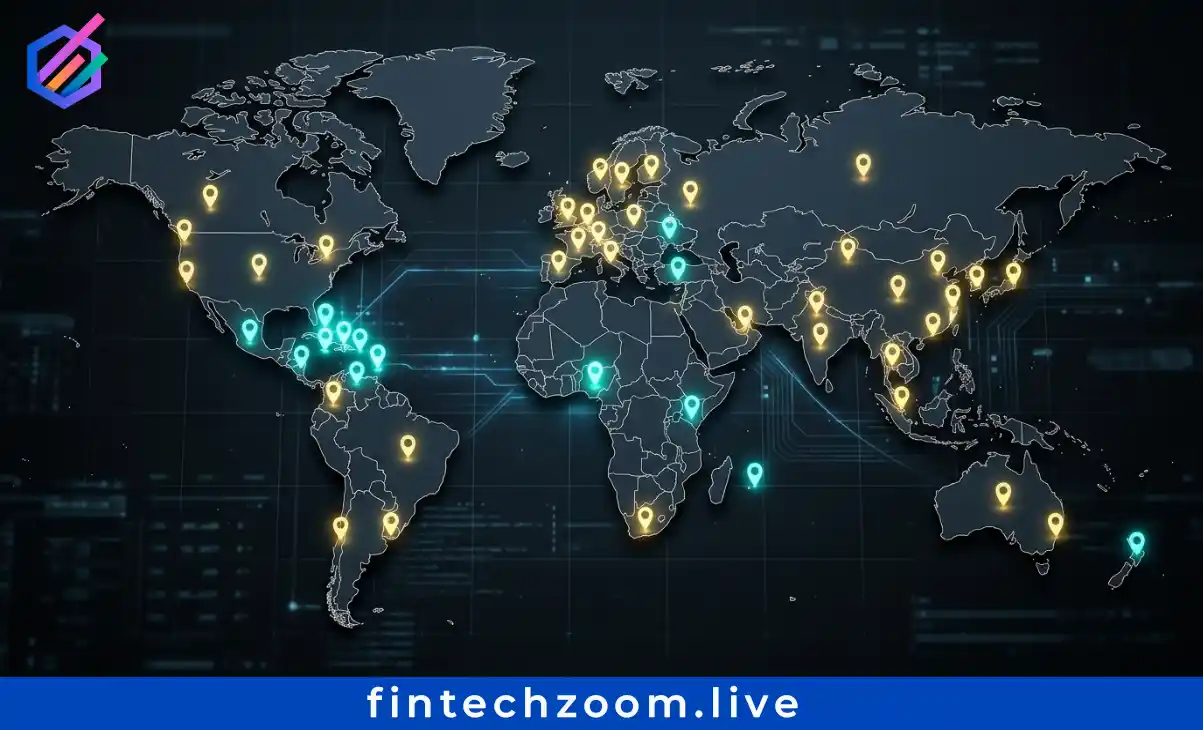
The Atlantic Council CBDC Tracker (last updated May 2026) maps 146 countries and currency unions exploring a CBDC, 77 in an advanced phase, 41 running pilots and 3 fully launched, in the Bahamas, Jamaica and Nigeria. The BIS survey of central banks (BIS Paper 159, 22 August 2025) found that of 93 central banks surveyed, 91 percent were exploring a retail or wholesale CBDC. Both are free.
Commercial and academic research
Commercial research firms add industry framing on top of primary data. Read the free executive summaries, and treat vendor-funded market sizing as a sales input, not a settled fact. Access labels below are honest: several require an email, and a few are paid.
| Report | Publisher | Access | Best for |
|---|---|---|---|
| Pulse of Fintech | KPMG | Free | Twice-yearly funding and deal data |
| Global Fintech Report 2026 | BCG and FT Partners | Free | Revenue and profitability trends |
| State of Fintech | CB Insights | Free with registration | Unicorn and sector funding tracking |
| CCAF reports | Cambridge Judge Business School | Free | Academic surveys of AI and alternative finance |
| NBER working papers | NBER | Free after 18 months, limited free access otherwise | Peer-level academic economics |
| SSRN Financial Economics Network | SSRN | Free | Pre-publication finance papers |
For scale, the KPMG Pulse of Fintech for H1 2026 (10 September 2026) reported 103.1 billion dollars of global fintech investment across 2,100 deals, up from 72.2 billion dollars in the second half of 2025 even as deal count fell, which KPMG read as capital concentrating in larger firms. The BCG and FT Partners Global Fintech Report 2026 (1 June 2026) put 2025 fintech revenues at 504 billion dollars, growing about four times faster than incumbent banks. The CCAF 2026 Global AI in Financial Services Report, produced with the BIS, IMF and World Economic Forum, surveyed 130 regulatory authorities on AI adoption and oversight.
Financial inclusion and emerging markets data
For data on the unbanked and on mobile money, the development bodies publish the most reliable figures.
| Source | Publisher | Access | Focus |
|---|---|---|---|
| Global Findex Database | World Bank | Free | Account ownership and payments across economies |
| State of the Industry Report on Mobile Money | GSMA | Free | Mobile money accounts and transaction value |
| CGAP research | CGAP (World Bank) | Free | Digital credit and inclusion in developing markets |
The GSMA State of the Industry Report on Mobile Money 2026 reported that mobile money processed more than 2 trillion dollars in transactions during 2025, a 23 percent rise on 2024. The World Bank Global Findex 2025 remains the anchor for account-ownership data.
How to judge a fintech research report
Before trusting any report, run it through five questions. Who funded it, since vendor-sponsored research serves a commercial aim. What is the sample, and is the method disclosed. When was the data collected, because 2024 figures often appear inside a report badged for 2026. How is the market defined, since estimates can diverge widely depending on whether crypto, embedded finance and adjacent technology are counted. And does it cross-reference primary sources such as central banks, government data portals or peer-reviewed papers rather than an internal survey alone.
Red flags are reports with no named author or institution, projected growth rates with no stated assumptions, and market sizing that cannot be reconciled with any other credible source. When two reputable reports disagree, that gap is itself information: read both methods and decide which definition fits your question.
Fintech research resources 2026: dated reports worth reading first
| Report | Publisher | Published | Access |
|---|---|---|---|
| Annual Economic Report 2026 | BIS | 28 June 2026 | Free |
| Global Financial Stability Report, October 2026 | IMF | 13 October 2026 | Free |
| Sound Practices for Responsible Adoption of AI | FSB | 15 October 2026 | Free |
| Pulse of Fintech H1 2026 | KPMG | 10 September 2026 | Free |
| Global Fintech Report 2026 | BCG and FT Partners | 1 June 2026 | Free |
| 2026 Geography of Cryptocurrency Report | Chainalysis | 2026 | Free with registration |
From our desk: what we found checking this update
The previous version of this page led with a long list of market-size figures, 2034 forecasts and vendor projections that carried no links back to a source we could open, so we removed them and rebuilt the page around sources you can verify. Checking the trackers turned up small inconsistencies worth noting: the BIS central bank survey (93 banks, 91 percent exploring a CBDC) is drawn from 2024 responses but was published in August 2025, while the Atlantic Council tracker, updated May 2026, counts 146 countries exploring and only 3 fully launched, so the “134 countries” figure that circulates in older write-ups is already out of date. The Chainalysis 2026 report page even disagreed with itself on whether it was the sixth or seventh edition. The takeaway that shaped this rewrite is that dates and definitions move faster than the round numbers people quote.
Fintech research resources FAQs
Where can I find free fintech research in 2026?
The widest free sources are the Bank for International Settlements, the Financial Stability Board, the International Monetary Fund and the World Bank, all of which publish full reports at no charge. Government data tools such as FRED from the St. Louis Fed, SEC EDGAR for company filings and the ECB Data Portal are also free. Among commercial firms, KPMG Pulse of Fintech and the BCG Global Fintech Report are free, while CB Insights and Cambridge Judge Business School offer free reports with an email registration.
What are the best primary sources for fintech data?
Primary sources are the ones that collect the data first, before any commentary is layered on. For the financial system as a whole that means the BIS, the IMF and national central banks. For company-level disclosure it means SEC EDGAR in the United States. For consumer finance it means the CFPB. For economic series it means FRED and the IMF and ECB data portals. Reading these directly lets you check a claim rather than trust a summary of it.
Is SEC EDGAR free to search?
Yes. EDGAR full-text search at sec.gov is free and covers electronic filings since 2001. You can search by company name, ticker, filing type and date, and read 10-K annual reports, 10-Q quarterly reports, S-1 registration statements and 8-K event filings for any listed company, including fintechs. It is the authoritative record for US public-company disclosures.
Which report tracks global fintech funding?
The KPMG Pulse of Fintech is the most cited free source for funding and deal volume, published twice a year. Its report for the first half of 2026, released on 10 September 2026, recorded 103.1 billion dollars of global fintech investment across 2,100 deals. CB Insights State of Fintech and PitchBook also track funding, with CB Insights free after registration and PitchBook paid.
How many countries are working on a CBDC?
The Atlantic Council CBDC Tracker, updated in May 2026, counts 146 countries and currency unions exploring a central bank digital currency, 77 in an advanced phase, 41 running pilots and 3 fully launched, in the Bahamas, Jamaica and Nigeria. A separate BIS survey of 93 central banks, published in August 2025, found that 91 percent were exploring a retail or wholesale CBDC. Both trackers are free to read.
Where can I find financial inclusion data?
The World Bank Global Findex Database is the benchmark, measuring account ownership and payments across economies; the 2025 edition found nearly 80 percent of adults worldwide hold a financial account and 1.3 billion remain without access. The GSMA State of the Industry Report on Mobile Money covers mobile money accounts and transaction value, and CGAP publishes research on digital credit in developing markets. All three are free.
How do I tell credible fintech research from vendor marketing?
Check who funded the report, whether the sample and method are disclosed, when the data was actually collected, how the market is defined, and whether it cites primary sources. Reports with no named author, growth forecasts with no stated assumptions, or market sizes that cannot be reconciled with any other credible source deserve caution. When two reputable reports disagree, read both methods rather than picking the bigger number.
What recent 2026 fintech reports should I read first?
Start with the BIS Annual Economic Report 2026 from 28 June, the IMF Global Financial Stability Report from 13 October, the FSB Sound Practices for Responsible Adoption of AI from 15 October, and the KPMG Pulse of Fintech for the first half of 2026 from 10 September. For crypto, the Chainalysis 2026 Geography of Cryptocurrency report is the standard reference. These are free or free with registration and are drawn from primary data.
How we report on fintech research
We list a source only after opening it and confirming the link works, the description is accurate and the access level is correct as of the revision date. We prefer primary institutions and government data over secondary summaries, label commercial and vendor research honestly, and drop any figure we cannot trace to a source a reader can open. Market-size projections and forecasts are inherently uncertain and are presented as the publisher’s estimate, not as fact.
Revision history: November 13, 2026 rewrite. Replaced the previous stat-led version (last modified 13 April 2026) with a verified directory of research sources, removed unsourced market-size and forecast figures and buy-sell framing, added dated 2026 publications from the BIS, IMF, FSB, KPMG and others, and fixed image alt text and the live-market widget.
Related: AI in finance trends 2026, Fintech regulation news 2026, Fintech cybersecurity trends 2026, Cryptocurrencies, Best ETFs to buy in 2026
This article is for information only and is not financial, investment or legal advice. Research projections and forecasts are the publishers’ own and carry material uncertainty. See our full disclaimer.
Sources: BIS Annual Economic Report 2026, BIS Paper 159 CBDC survey, IMF GFSR October 2026, FSB AI sound practices, World Bank Global Findex 2025, KPMG Pulse of Fintech H1 2026, BCG Global Fintech Report 2026, Atlantic Council CBDC Tracker, GSMA State of the Industry Report on Mobile Money 2026, FRED.